Tax-Exempted Non-Profit Public Charity Organisation u/s 501 (c)(3) of IRC | NTEE Code: X70 (Hindu-religious) | EIN: 41-2836272 | Date of Formation: 11/25/25

Mahakaal Temple

Sacred space for worship and spiritual practice

AYODHYA MAHAKAAL TEMPLE

The Mahakaal Temple in Ayodhya stands as one of the most revered and powerful spiritual centers, dedicated to Lord Shiva in his form as Mahakaal—the Great Time, the Destroyer of Time, and the Lord beyond Time itself. This sacred temple embodies the eternal truth that time is but a manifestation of the divine, and through devotion to Mahakaal, one transcends the limitations of temporal existence.

Located in the ancient and holy city of Ayodhya, the Mahakaal Temple represents the convergence of timeless spiritual wisdom and divine grace. Ayodhya, known as the birthplace of Lord Rama, becomes even more significant with the presence of Mahakaal, representing the ultimate reality that encompasses all forms of divinity—both the preserver (Rama) and the destroyer (Shiva) are manifestations of the same eternal truth.

MAHAKAAL

Shiva as Mahakaal represents the timeless and eternal aspect of the divine. The term "Mahakaal" combines two words: "Maha," meaning great, and "Kaala," meaning time or death. As Mahakaal, Shiva is the ultimate destroyer of time and death, transcending the limitations of mortality and temporal existence. He is the lord of dissolution, responsible for bringing an end to the cosmic cycle of creation, preservation, and destruction.

Mahakaal's blessings enable devotees to transcend the fear of death and break free from the relentless cycle of samsara, the perpetual cycle of birth, death, and rebirth. Through his grace, devotees undergo profound inner transformation, awakening to the eternal truth of their divine nature, transcending the illusions of the material world.

MAHAKAAL TEMPLE HISTORY

Yogi Ravindranath first visited the divine city of Ayodhya in 2001 during his Akhand Bharat Yatra, an all-India travel. During his meditation, he experienced that the city has a profound connection with him in his last birth.

On January 22, 2024, the inaugural day of Lord Shri Ram temple in Ayodhya, being one of the 8000 invited VIP dignitaries, a divine message dawned upon Yogi Ravindranath ji divinely from the Lord Shri Ram main idol, to build a Shiva Mahakaal temple in Ayodhya. The next day, he miraculously received an east face land nestled along the banks of the Sarayu river and completed all registration works on the following day. He believed that the land is a true gift of holy prasadam from Lord Shri Ram.

Immersing himself in meditation for 3 days in Ayodhya, Yogi Ravindranath ji was able to visualize the ancient architect of the Mahakaal Temple.

MAHAKAAL TEMPLE ARCHITECTURE

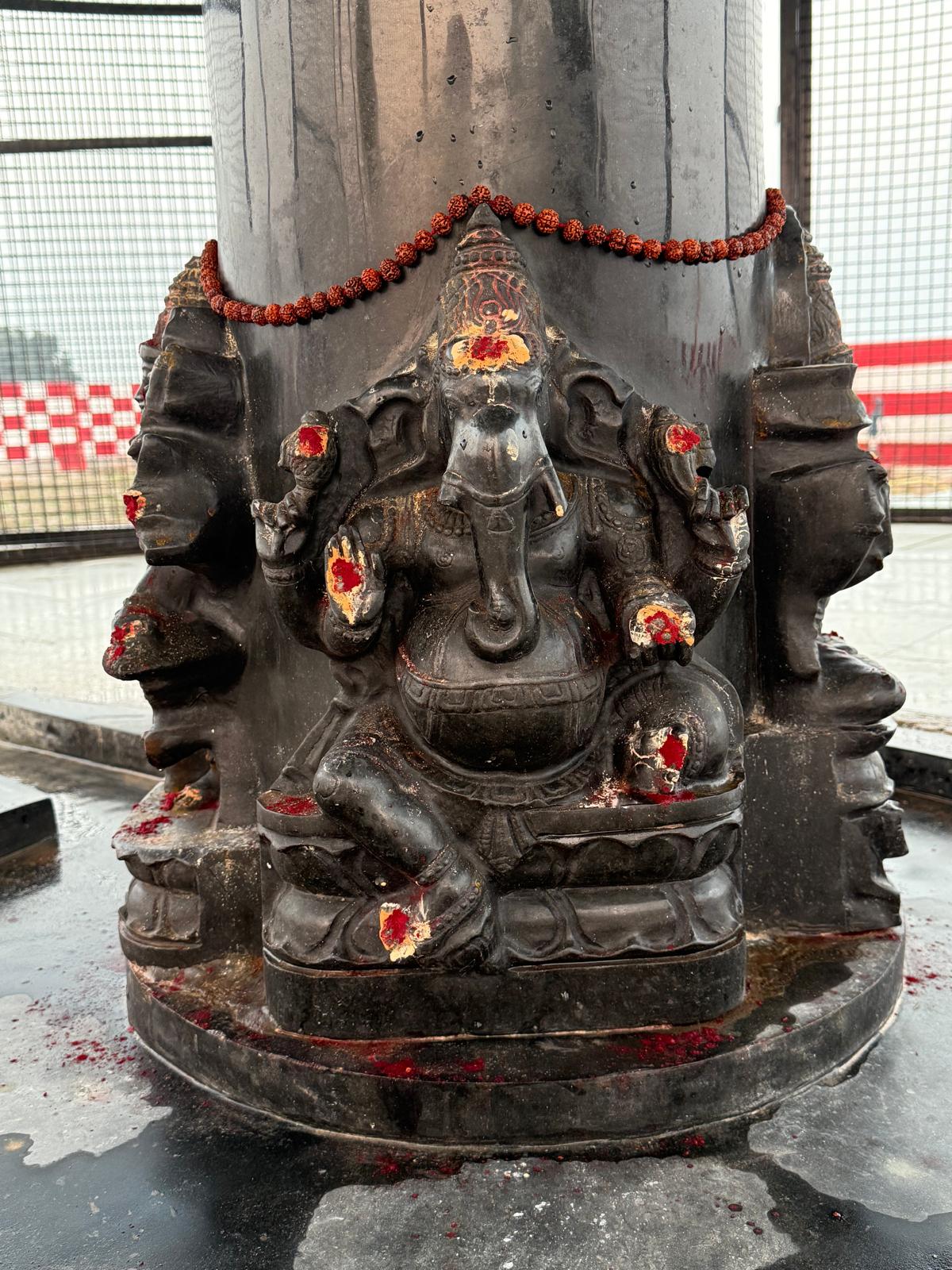
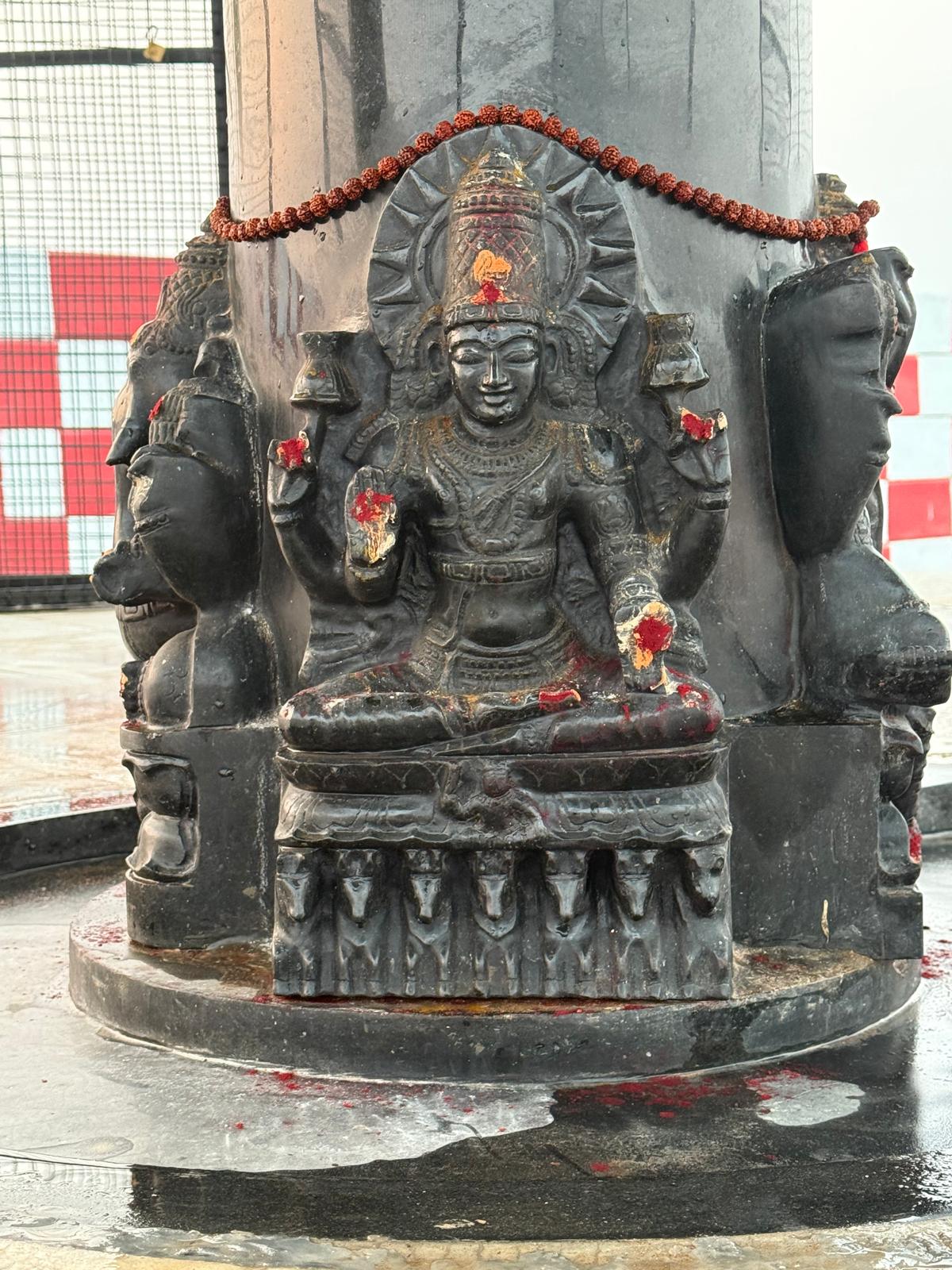
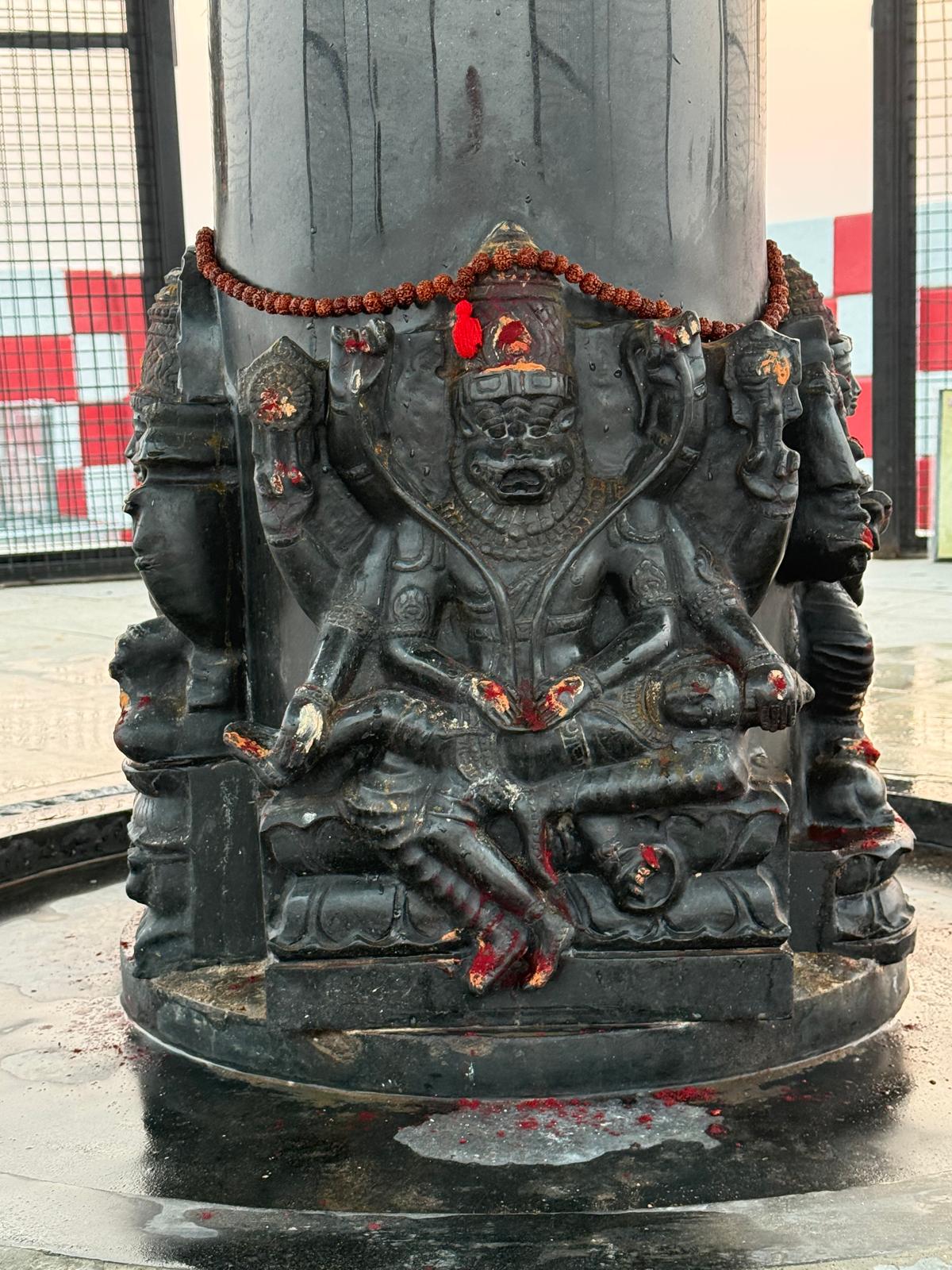
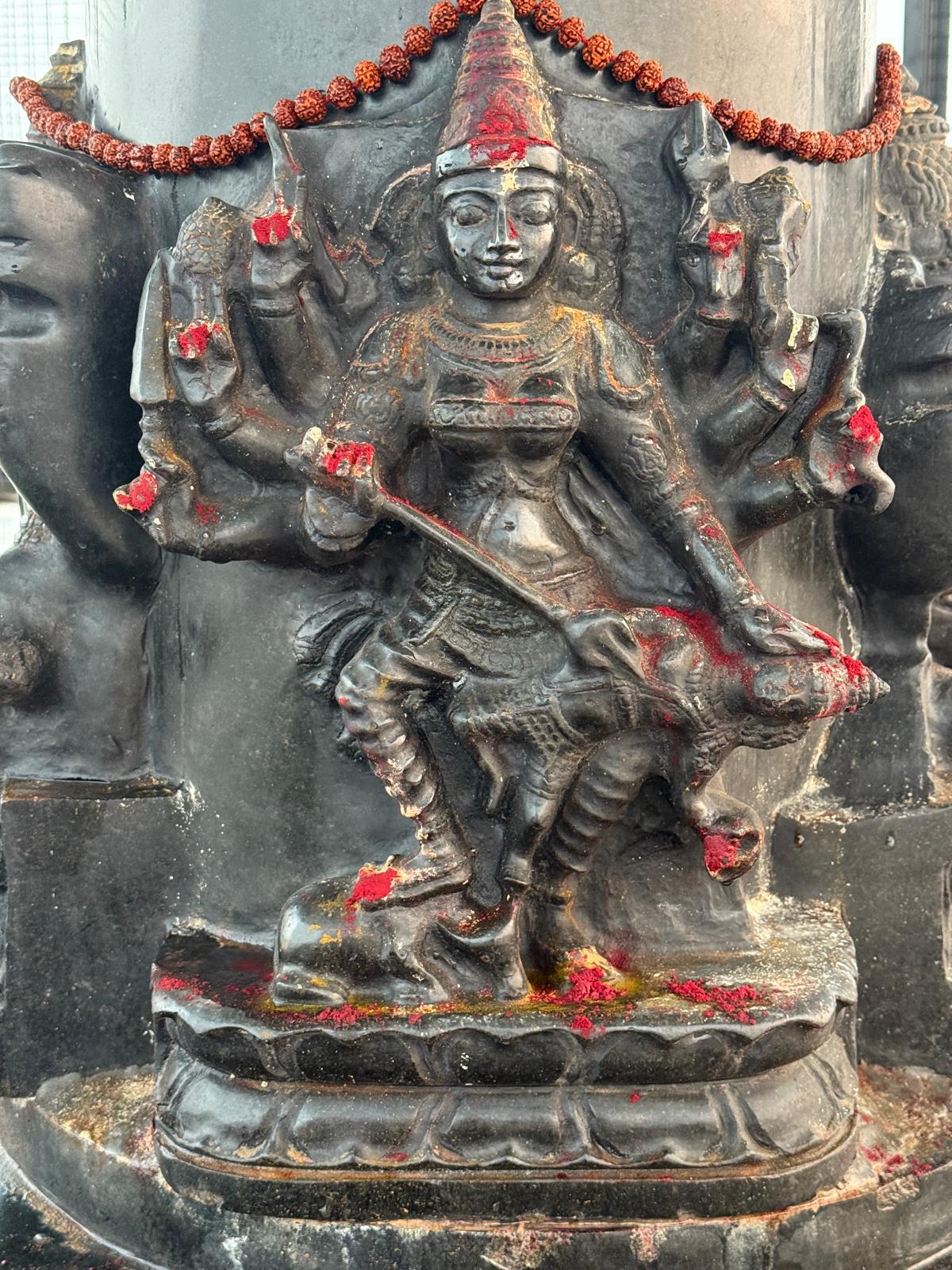
In its architectural symphony, the temple ingeniously integrates the unity of the 5 principal branches i.e., Ganapatya, Shaiva, Shaktha, Vaishnava and Saura symbolizing the unbreakable bond of Panchayatana tradition of Sanatana Dharma. At the centre lies a single stone of the God of Time, Lord Mahakaal Shiva Lingam idol combined together with 4 other deities Ganesha, Chamundi Devi, Ugra Narasimha and Surya, as the controller of Death.

The Lord Mahakaal is surrounded inside the Sanctum by the Dasha Mahavidyas, 10 Tantric deities of Shaktism guiding seekers along the path of enlightenment and inner transformation:

  1. KALI - Goddess of Time
  2. TARA - Goddess of Salvation
  3. TRIPURA SUNDARI - Goddess of Beauty
  4. BHUVANESWARI - Goddess of the Planets
  5. BHAIRAVI - Goddess of Dreadful
  6. CHHINNAMASTA - Goddess of Self decapitated
  7. DHUMAVATI - Goddess of smoke
  8. BAGALAMUKHI - Goddess of Control
  9. MATANGI - Goddess of Wisdom
  10. KAMALA - Goddess of Purity

Guarding its sacred precincts of Lord Mahakaal, the Asta Dikpalakas (8 directional gods) stand as sentinels, each in their cardinal direction, ensuring divine protection and auspicious energies flow unimpeded. The sacred Shri Yantra adorns the Gopuram, serving not just as an architectural adornment, but as a visual ode to the divine geometry and the quintessence of the Sri Vidya tantric tradition.

Each dimension of the temple, meticulously measured at 16 feet from the epicentre, reverberates with the resonance of the Shodasha mantra, a testament to the harmonious alignment of cosmic energies. Together, these elements converge to create not just a temple of stone and mortar, but a living testament to the eternal truths of Hindu philosophy and spirituality.

The envisioned temple embodies great symbolism and intricate design, meticulously crafted to encapsulate the essence of spirituality and tradition. Standing as a majestic 32x32x32 cube, it will serve as a sacred sanctuary fashioned entirely from the solemn beauty of black granite, a material chosen to evoke strength, endurance, and transcendence.
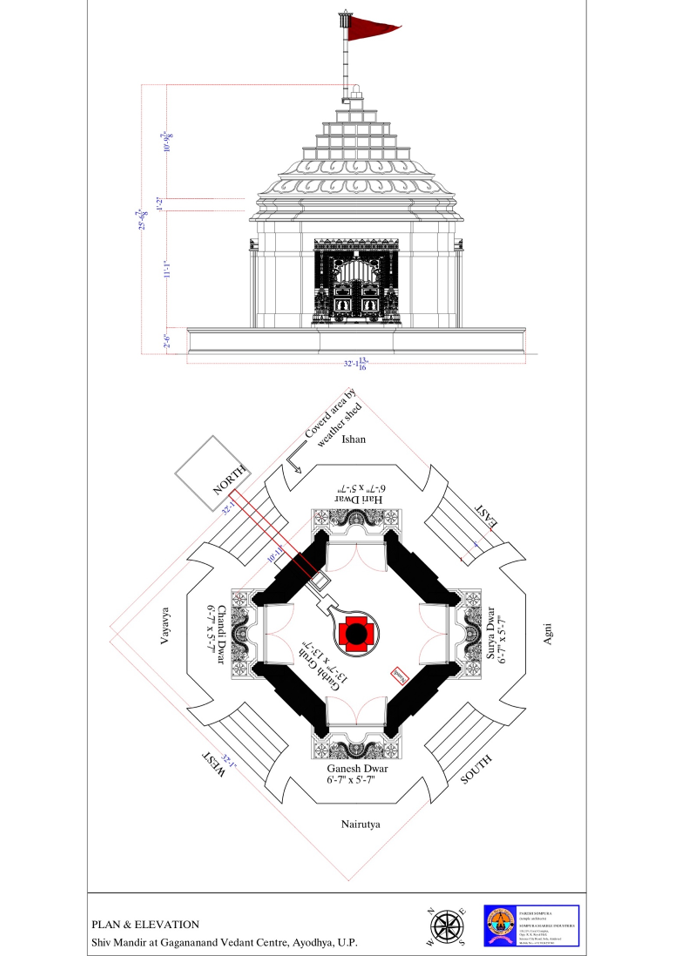
Ayodhya Mahakaal Temple Dimensions

Mahakaal Temple - Architectural Dimensions
SHIVA PANCHAYATANA

The Shiva Panchayatana system is a sacred tradition within Hinduism that encompasses the worship of five principal deities, with Lord Shiva at the center. This system holds immense significance for devotees seeking spiritual fulfillment, protection, and blessings from the divine forces governing various aspects of life.

At the heart of the Shiva Panchayatana system is Lord Shiva, the supreme deity of destruction and transformation. Revered as the ultimate ascetic and cosmic dancer, Shiva represents the transcendental aspect of the divine and is worshipped as the dissolver of obstacles and the granter of boons. Accompanying Shiva in the Panchayatana puja are four other deities, each symbolizing different facets of existence:

  1. Ganesha: The remover of obstacles and the patron of beginnings. With his wisdom and benevolence, Ganesha blesses devotees with success, prosperity, and the ability to overcome challenges on their spiritual journey.
  2. Devi (Shakti): The divine feminine energy, Devi is the consort of Shiva and the embodiment of power, wisdom, and nurturing love.
  3. Vishnu: The preserver and protector of the universe, Vishnu embodies the principle of sustenance and divine order.
  4. Surya: The Sun god, Surya, symbolizes life, vitality, and enlightenment. As the source of light and energy, Surya is worshipped for bestowing health, strength, and spiritual illumination upon devotees, guiding them on the path of righteousness.

The Shiva Panchayatana puja involves worshiping these 5 deities, performing rituals and prayers to invoke their divine presence. Through offerings of flowers, incense, and sacred chants, devotees express their reverence and seek blessings for spiritual growth, protection, and fulfillment of desires.

The beauty of the Shiva Panchayatana system lies in its inclusivity, as it embraces the diversity of Hindu deities and their unique attributes while emphasizing the unity of the divine essence. By worshipping Shiva and the accompanying deities together, devotees cultivate a holistic approach to spirituality, acknowledging the interconnectedness of all aspects of existence and seeking harmony with the cosmic order.

In essence, the Shiva Panchayatana system serves as a sacred pathway for devotees to commune with the divine in its multifaceted manifestations, fostering devotion, gratitude, and inner transformation on the journey towards spiritual enlightenment and ultimate liberation.

MAHAKAAL MANDIR DIMENSIONS

The Mahakaal Mandir is going to be situated on the most auspicious land on earth in Ayodhya, located on the triangle of Shree Ram Mandir and Hanuman Garhi Mandir. It is a wonderful and source of high power of cosmic energy of complete Shree Yantra made in Black granite from South India.

Main Temple Structure

  • The size of the temple is 32'-0" x 32'-0" x 25'-6" from ground
  • The size of Garbh Gruha is 13'-7" x 13'-7"
  • The size of 4 walls is 13'-4" x 10'-0"
  • The size of gopuram is 32' x 32'
  • The size of parikrama is 7'-0" wide all 4 sides
  • The size of 4 wooden doors is 6'-7" x 5'-7"
  • The size of 4 beams above door wall is 13'-4" x 1'-2"
  • The size of shikhar above the beams is 18'-10" x 18'-10" x 10'-9" high
  • The height of plinth is 2'-6"

Staircases

There are 4 staircases with 4 steps each, with width of 1 ft and riser of 6". The length of steps varies from 4 ft-6" to 3'-6" as per drawing:

  • South – Mrityunjaya sopan (Step)
  • East – Indra sopan
  • West – Varun sopan
  • North – Kuber sopan

Garbh Gruha Details

The Garbh Gruha has Panchayatana Mahakaal Bhagwan Shiva at the center as per drawing along with monolithic Shree Ganesh, Surya Bhagwan, Ma Chamunda & Sri Narsimha will be placed. The water will be discharged in North direction.

There will be no electrical fittings and lights, but the lamps of natural oil will illuminate the interior of the Garbh Griha.

Four Sacred Doors

There are four wooden doors with Gold plate cladding of the size 5 ft-7 inch wide and 6 ft-7 inch high, intricately carved in double panel:

  • Ganesha dwar (Door) – South west direction
  • Chamunda dwar – North west direction
  • Hari dwar or Vishnu dwar – North East direction
  • Surya dwar – South East direction

Boundary Wall

The boundary wall on South will be a wall made from stone 1'6" wide of 8 ft high, and other three sides with MS steel railings as per approved design.

Gaganananda Mission at Mahakaal Temple

The Ayodhya Mahakaal Temple serves as the primary center for the Gaganananda Mission, founded by Yogi Ravindranath ji (Swami Gaganananda) on February 18, 2011. The mission operates on five fundamental pillars: SANATANA (Ancient Knowledge), SANSKRUTI (Ancient Culture), SWASTYA (Ancient Wellness), SADHANA (Ancient Spiritual Practice), and SEVA (Ancient Selfless Service).

At the temple premises, the mission actively engages in cultural activities, training programs, healing services, and various spiritual practices. The temple hosts regular training sessions in Classical Music, Dance, Yoga, and other fine arts, welcoming all who seek to connect with these ancient traditions.

The Five Seva Services

The mission offers five essential seva (selfless service) programs free of charge to all devotees and visitors:

  • Anna Seva - Free food service to all visiting devotees
  • Jala Seva - Free drinking water service for the community
  • Vidya Seva - Free education including Vedic studies, modern skills, and empowerment programs
  • Vaidya Seva - Free healthcare and healing water from Mahakaal abhishekam
  • Prakruti Seva - Environmental protection and nature conservation initiatives

The healing water from the Mahakaal abhishekam, energized with Vedic mantras and herbal preparations, is offered free of cost to those seeking health and wellness. The temple also provides space for meditation, spiritual practices, and cultural learning, all in service of the community and the preservation of ancient wisdom.

Learn more about the Gaganananda Mission →

Sacred Moments

Experience the Divine Presence Through Video

Temple Rituals

Witness the sacred rituals and ceremonies performed at the Mahakaal Temple, connecting devotees with the divine presence of Lord Shiva.

Spiritual Journey

Experience the spiritual atmosphere and divine energy of the Mahakaal Temple through this immersive visual journey.

The Greatness of Mahakaal

Lord of Time

Mahakaal represents the ultimate reality that exists beyond time. He is the master of all temporal cycles—past, present, and future—and devotees seek his grace to transcend the limitations of time and achieve liberation.

Destroyer of Ignorance

As the destroyer aspect of the divine trinity, Mahakaal destroys not just the physical form but, more importantly, the ignorance and delusion that bind the soul to the cycle of birth and death.

Bestower of Liberation

Through devotion to Mahakaal, practitioners receive the grace to overcome all obstacles—both material and spiritual—and achieve moksha, the ultimate liberation from the cycle of samsara.

Protector of Devotees

Mahakaal is known as the fierce protector of his devotees, removing all negative influences and providing spiritual strength to overcome life's challenges and obstacles.